Understanding True Kidney Recovery: What Most People Miss
By: Uzor Peters Organics
By: Uzor Peters Organics
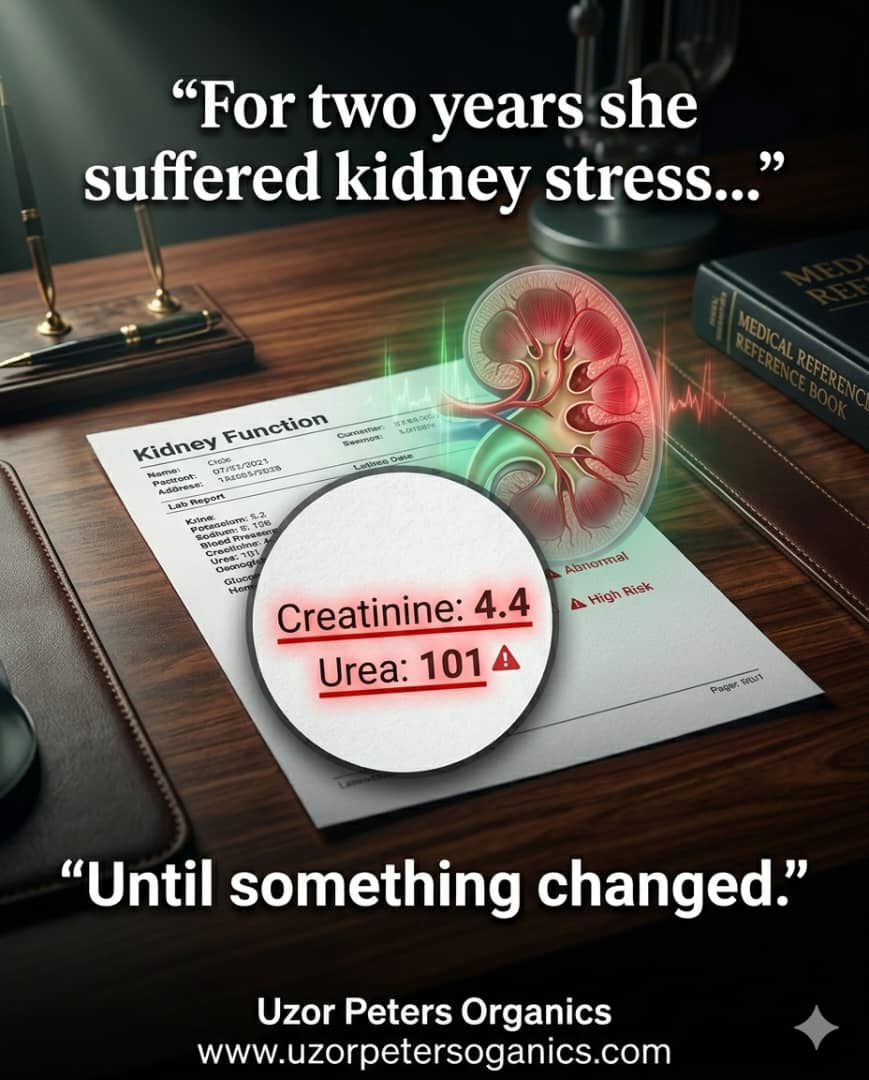
Let me walk you through something very important—something that goes beyond lab results and speaks to how the body truly heals.
Recently, a patient completed Phase 1 and Phase 2 of a structured Kidney Reboot program. This wasn’t a mild or early-stage case. Her clinical profile showed significant stress on the body:
This is what we describe as a high-pressure internal state—a condition where multiple systems in the body are under strain.
But here’s where it gets interesting.
After following a carefully guided nutritional and therapeutic plan, she reported:
“My electrolytes are now normal…”
“I no longer wake more than once at night to urinate…”
“My blood pressure now stays around 130/90…”
At first glance, these may seem like small improvements. Clinically, however, they are highly significant.
They point to something deeper: internal stabilisation.
Electrolytes play a critical role in maintaining the body’s internal balance. They regulate:
When electrolyte levels are unstable, it signals systemic stress. When they return to normal, it suggests:
This is not just improvement—it’s recovery in motion.
Frequent urination at night is a common sign of kidney stress. It often means:
The kidneys are struggling to regulate fluid
Again, this reflects functional recovery, not just symptomatic relief.
This transformation wasn’t accidental. It wasn’t based on guesswork or random dietary changes.
It was the result of structured therapy designed to address root causes:
Many people focus only on lab numbers like creatinine and urea.
While these are important, they don’t tell the full story.
What often gets ignored is the internal environment—the underlying pressure within the body’s systems.
Until that internal stress is reduced, lab numbers may fluctuate without lasting improvement.
The structured phases are intentional:
Phase 1:
Phase 2:
Phase 3 (Next Step):
Each phase builds on the previous one, creating a sustainable path to recovery.
Recovery doesn’t always begin with lab results.
It starts with functional improvements, such as:
These are early indicators that the body is responding positively.
Kidney conditions are rarely isolated issues.
They reflect a broader systemic imbalance—a body under pressure.
When that pressure is reduced, the body begins to stabilise, often in subtle but powerful ways.
How many times do you wake at night to urinate?
When last did you check your creatinine levels?
These simple questions can reveal a lot about your internal state.
Healing isn’t magic.
It is the result of structure, consistency, and the right guidance.
— Uzor Peters
Uzor Peters Organics
🌐 www.uzorpetersoganics.com



0 Comments
Write a Comment